
Japan’s first research vessel with icebreaking capabilities! A research vessel with icebreaking capabilities makes an advance appearance as a plastic model! The Research vessel / ARV Mirai II has been turned into a 3D model!
Japan’s first research vessel with icebreaking capabilities! A research vessel with icebreaking capabilities makes an advance appearance as a plastic model! The Research vessel / ARV Mirai II has been turned into a 3D model!
2026-09-28
Scheduled for completion in 2026,
Japan’s first research vessel with icebreaking capabilities!
A research vessel with icebreaking capabilities
—quite rare even in the history of Japanese plastic models—
makes an advance appearance as a plastic model!
The Research vessel / ARV Mirai II has been
turned into a 3D model!
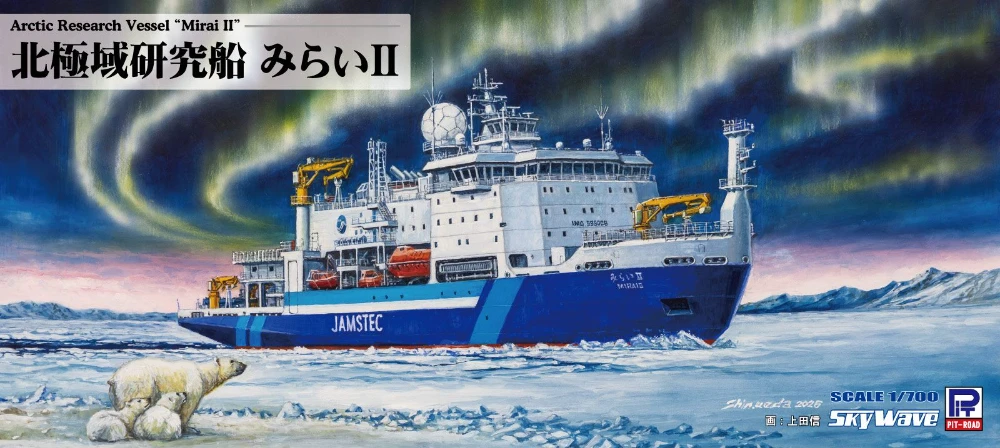
“Where is the fun in looking at a plastic model of an icebreaker?” It is precisely those who have this question that should pay attention to “J116 1/700 Arctic Region Research Vessel Mirai II.” The model ship, “Mirai II,” is scheduled for completion in 2026 as Japan’s first research vessel equipped with icebreaking capabilities. This state-of-the-art vessel is turned into a 3D model on a 1/700 scale, and can be enjoyed as a completely new mold, making it a compelling subject for ship model enthusiasts. The completed size is 181.6 mm in total length and 39.6 mm in overall width. By condensing the giant real ship into a size that fits on a desk, you can closely observe not only the hull’s silhouette but also the equipment unique to research vessels and the wealth of detail on the deck, which is the unique appeal of this kit.
“It looks like a research vessel, but can it really navigate icy seas?” Of course, that is a major feature of “Mirai II.” The actual ship has the capacity for continuous icebreaking through 1.2-meter-thick level first-year ice at 3.0 knots and also complies with Polar Class 4, or PC4. This indicates the capability for year-round operation in sea areas with thick first-year ice containing some multi-year ice inclusions. Rather than simply making the hull sturdy, an icebreaking hull shape that achieves excellent navigation performance in both icy and open waters has been adopted. Heading into the harsh environment of the Arctic region and pushing through ice while continuing observations: when you look at the bow and hull shape of the model with that purpose in mind, you will find new discoveries even in the sculpting itself, realizing that “there’s a good reason for this shape.”
Furthermore, “Mirai II” is not just a ship that can move forward. Inheriting the Doppler weather radar from its predecessor, the Oceanographic Research Vessel “Mirai,” it features fully equipped research labs inside. It even includes a moon pool that allows observation instruments, including CTD water samplers, to be lowered directly into the sea from inside the ship. Additionally, the multi-purpose crane makes it possible to lower personnel directly onto the sea ice using a man-riding basket. It might be easier to visualize it not as “a ship for making observations,” but as “a massive research base itself.” Because it incorporates many pieces of equipment distinct from standard vessels, another deep aspect of this model lies in being able to assemble it while imagining those roles.
What is even more interesting is the onboard equipment. The actual vessel operates various exploration equipment, such as the 3,000-meter-class ROV “Hokuto” and the under-ice observation drone “COMAI” currently under development by JAMSTEC. The workboat “Shirokuma” assists with launching and retrieving these systems and handles detailed observation tasks. And this kit comes complete with that “Shirokuma.” It is a detail that makes you wonder, “They even recreated that?” It features a configuration that makes you want to imagine what kind of observation activities actually take place in the Arctic, rather than just completing the hull. Precisely because it is a ship with world-class, high-precision observation capabilities, even a single small workboat has a role, and the more you learn about the background, the more your perspective on the model changes.
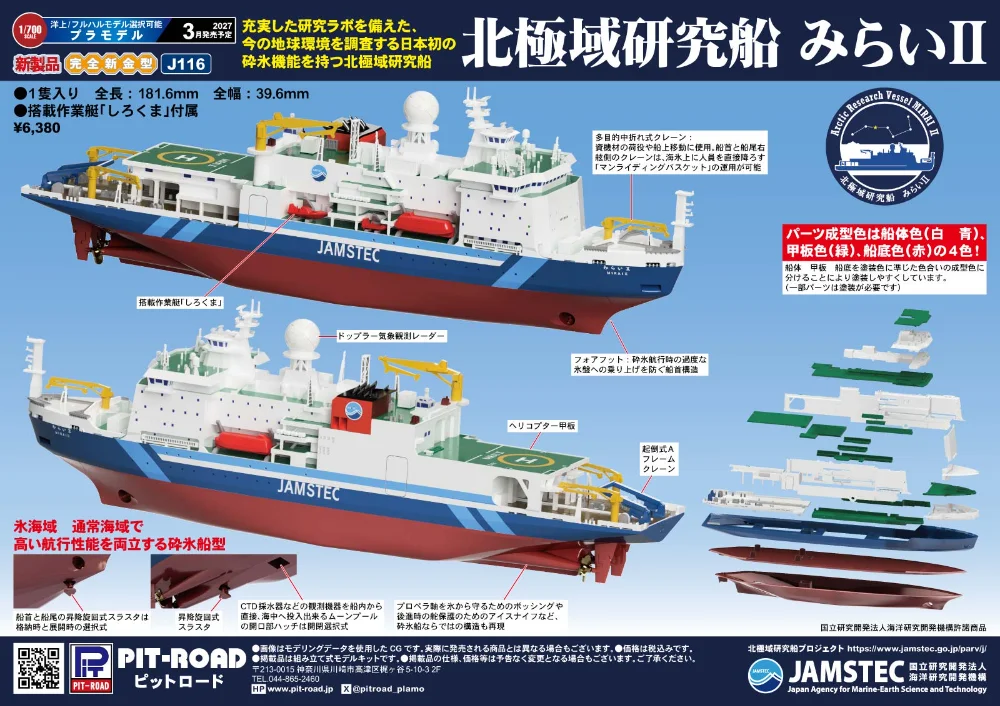
The ingenuity as a plastic model cannot be overlooked either. Containing one ship at 1/700 scale, you can choose between a waterline model to enjoy its appearance above the sea surface or a full-hull model that recreates down to the bottom of the ship. It satisfies both those who want to depict it navigating the open ocean and those who want to admire the full shape of the hull in detail. In addition, it adopts a 4-color molding system featuring white and blue for the hull, green for the deck, and red for the bottom, dividing parts in colors close to the actual paint scheme. Although some painting is required, you can assemble it by taking advantage of the color separation or thoroughly paint it to increase the amount of detail. Being able to pursue the finished form according to the builder’s experience and preferences is a welcome feature.
The charm of “J116 1/700 Arctic Region Research Vessel Mirai II” goes beyond just modeling a rare ship. Each element, such as icebreaking performance, observation equipment, exploration devices, and the workboat, links to the purpose of “exploring unknown seas.” Unlike naval ships built for combat, this ship sails to understand nature, survey the ocean, and research the future of the Earth. If you assemble it after learning about that background, the 181.6 mm hull should feel like a much grander presence. It is a plastic model that goes beyond display after completion, sparking your intellectual curiosity to look up the real ship and ask, “What does this piece of equipment do?”
1/700 Scale Model Kit
- Research vessel / ARV Mirai II
- Research vessel / ARV Mirai II
Related Articles
-
 Japan's first domestically produced 4-wheel drive vehicle in the history of the Imperial Japanese Army! The Type 95 Small Passenger Car ”Kurogane Yonki” Machine Gun Equipped Type has been three-dimensionalized with mini crew figures!2026-08-19 Saori
-
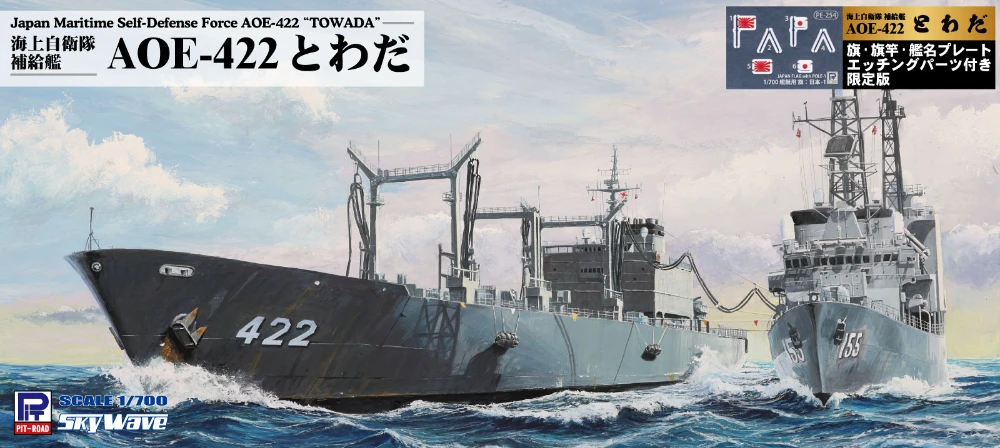 A high-speed, large replenishment ship commissioned in 1987! The huge 238mm overall length hull allows a choice between waterline or full-hull models! JMSDF Replenishment Ship AOE-422 Towada turned into a 3D model in 1/700 scale!2026-08-03 Saori
-
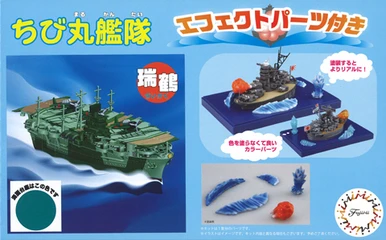 [Chibimaru Fleet] Special edition original effect parts are included! Sculpted in a super rare appearance featuring the camouflage painting from the 1944 Battle of Leyte Gulf! Chibimaru Fleet Zuikaku Special Edition (with Effect Parts) is now available!2026-07-24 Saori
-
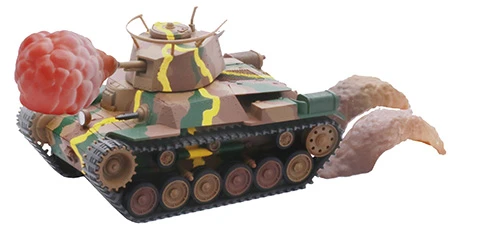 [Chibi-Maru Military] Comes with gunfire smoke (muzzle flash) & dust cloud parts! It is packed with attention to details like the caterpillars! From the Chibi-Maru Military series, the Type 97 medium tank Chi-Ha 57mm turret is now available as a 3D model!2026-06-03 Saori
-
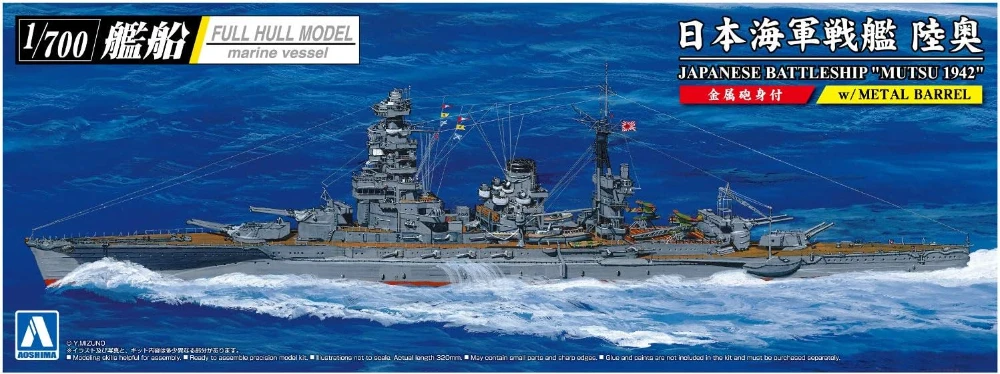 [BATTLE SHIP] The Battleship MUTSU, one of the ”Big Seven,” has been renewed! Assemble the battleship in full-hull model specifications that accurately reproduce the precision of the 1/700 scale!2026-05-01 Saori
-
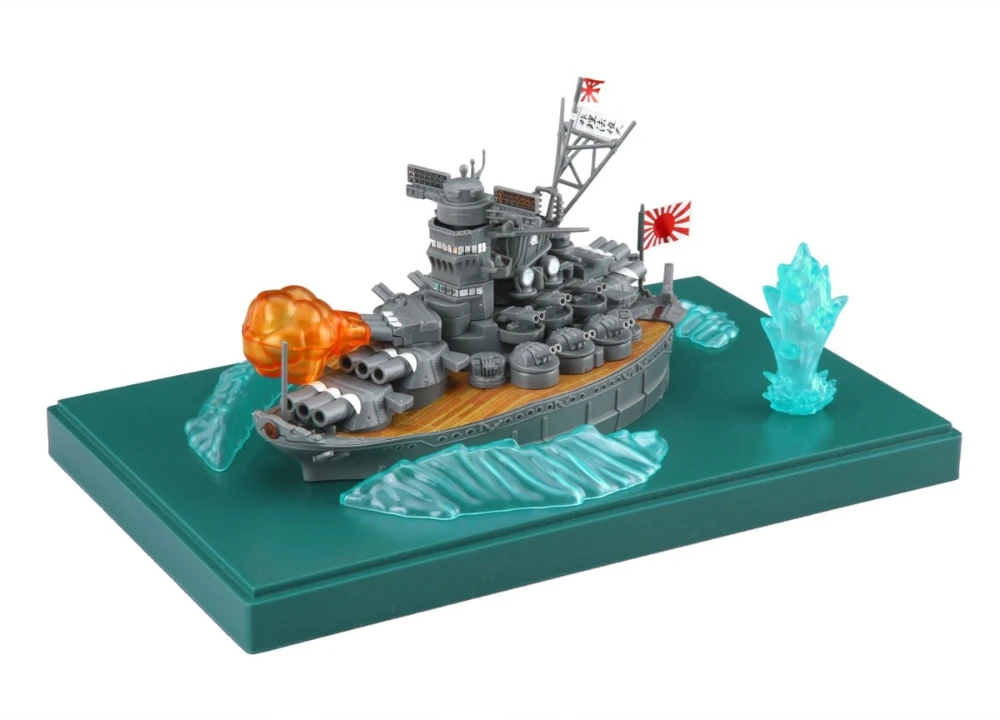 [Battleship Yamato] Special edition original effect parts included! Recreate the cool sight of it cutting through waves and firing its batteries! Japanese Battleship Yamato joins the Chibimaru Fleet as a limited edition!2026-03-29 Saori
Popular Articles
-
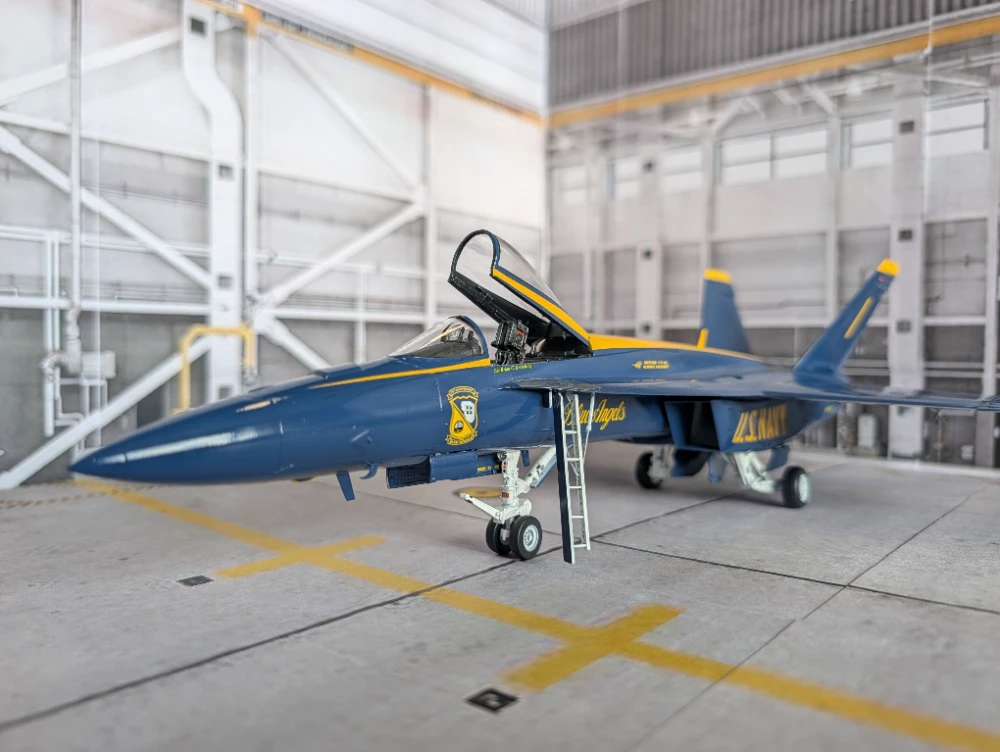 [Customer Showcase #14] 1/48 Revell F/A-18E Super Hornet2026-09-24 Customer Showcase
-
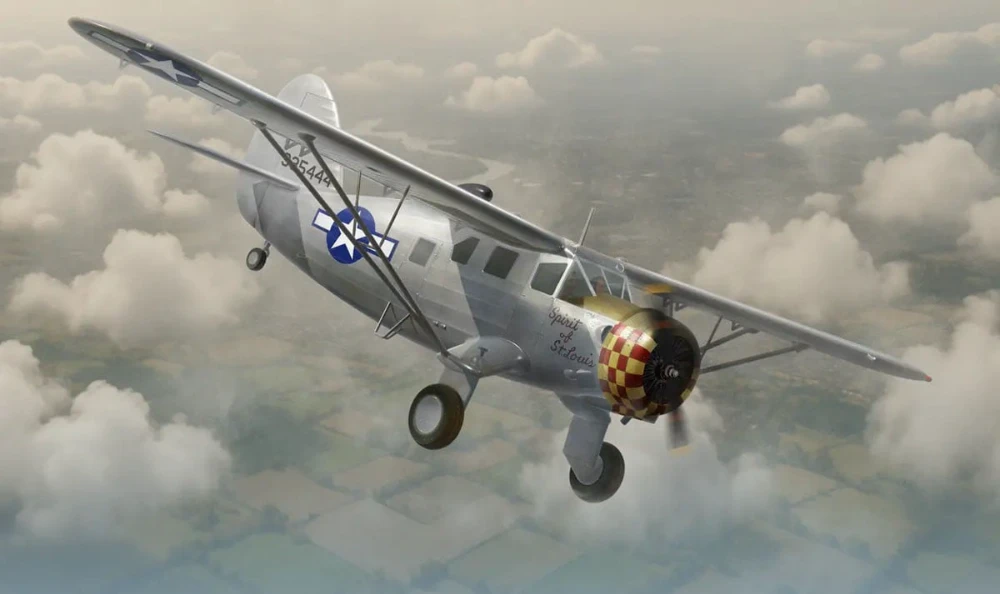 Noorduyn UC-64A Norseman: The Legendary Canadian Bush Plane2026-10-01 Saori
-
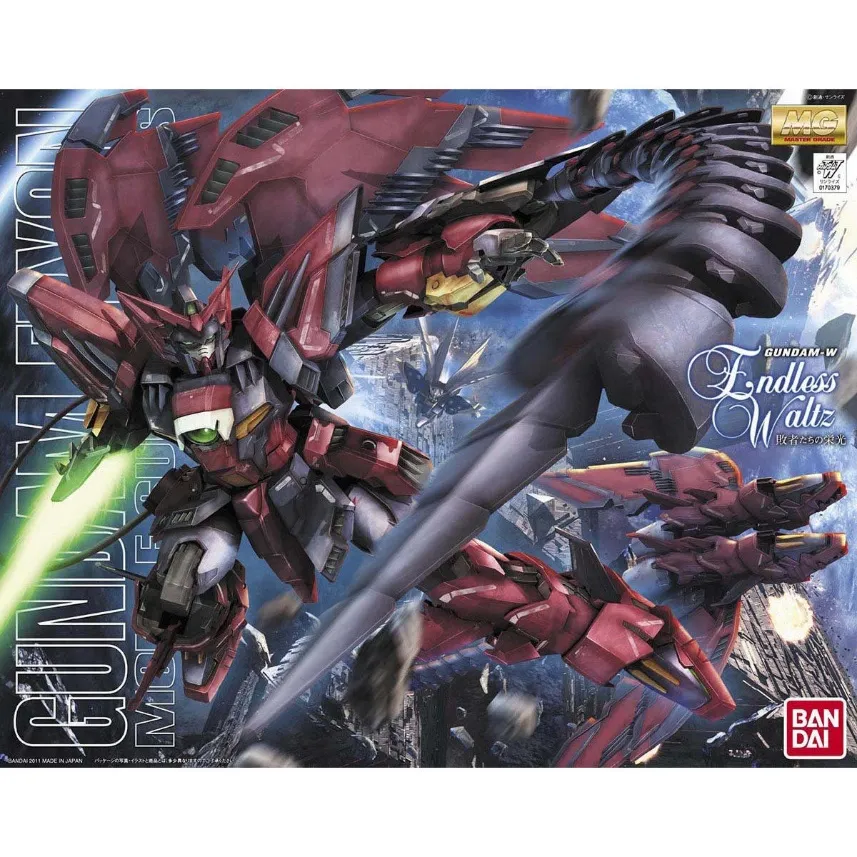 【NEW MOBILE REPORT GUNDAM WING】Another chance to get yours! Gundam Epyon arrives in a new design as the Endless Waltz version! From MS form to flight form, completely transforming, don't miss the crimson Gundam Epyon!2026-10-15 Saori
-
 [Trail Mini 4WD] Limited-Time Halloween Version!? Easy-to-Assemble and Customizable Trail Mini 4WD Featuring a “Jack-o'-Lantern” Driver Arrives!2026-09-20 Saori
-
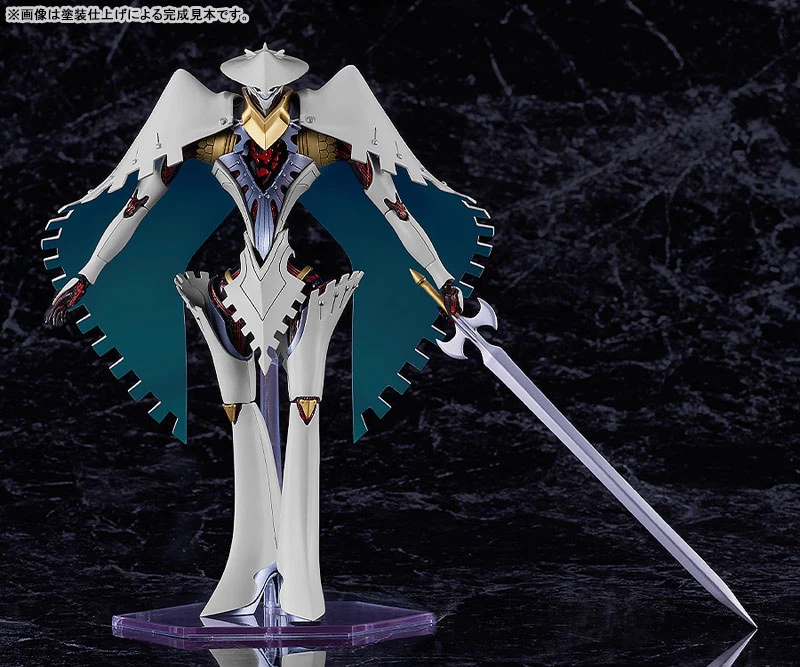 [Metaphor: ReFantazio] The Archetype “Seeker,” effectively the protagonist’s alter ego, is now a plastic model! Its stylish look, balancing soft clothing with the coldness of machinery, is rapidly soaring in popularity!2026-10-07 Saori
-
 The night fighter Gekko, operated by the Imperial Japanese Navy, is now a 3D model! The popular aircraft that entered service in 1942 and flew through numerous battlefields and night skies is rendered in 1/72 scale!2026-07-29 Saori