
A kit of the Le Mans spec XJR-8 that competed in Round 4 of the 1987 WSPC! Resin parts added, along with special parts for fine details! Jaguar XJR-8 LM materialized in 1/24 scale!
A kit of the Le Mans spec XJR-8 that competed in Round 4 of the 1987 WSPC! Resin parts added, along with special parts for fine details! Jaguar XJR-8 LM materialized in 1/24 scale!
2026-06-01
A kit of the Le Mans spec XJR-8 that competed in Round 4
of the 1987 WSPC!
Resin parts added, along with special parts for fine details!
Jaguar XJR-8 LM materialized in 1/24 scale!
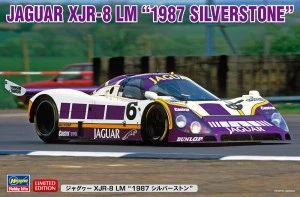
Racing car models possess a mysterious charm. It differs from the ruggedness of a tank and is slightly different from the sharpness of a fighter jet. The shapes, honed solely to slice through the air, have a unique allure that the words ”functional beauty” fail to fully capture. And I believe the ”Jaguar XJR-8 LM ”1987 Silverstone”” is a car where you can truly savor that charm to the fullest. The low, long, and ferocious silhouette peculiar to 1980s Group C machines. Just gazing at its form conveys the powerful presence of a ”machine born solely to compete for speed.”
What this kit reproduces is the Le Mans spec XJR-8 that competed in Round 4 of the 1987 WSPC at Silverstone. This is a highly interesting point, as it doesn’t simply end with saying ”it’s an XJR-8.” It meticulously picks up on the specification differences for each race, attempting to encapsulate the era, the circuit, and even the atmosphere of that battle. This is exactly where the real thrill of motorsport models lies. Even with the same car name, the aerodynamic treatments and minor details change depending on the race it entered, and the more you learn about those differences, the deeper it gets. This kit is fully packed with such ”fun of race car research and analysis.”
What particularly catches the eye in this version is the added resin parts. The flap extension at the center of the front cowl, and the air outlets on the upper part of the front fenders. It might seem minor when just reading the words, but in reality, this difference is quite significant. These kinds of aerodynamic parts are crucial elements that shape the unique, extraordinary presence characteristic of Group C cars, and even a slight change in the lines can alter the impression of the entire machine. Because this kit thoroughly reproduces those subtle variations, it successfully stands not just as ”a mere XJR-8,” but as the ”1987 Silverstone Spec.”
Looking at the shape of the XJR-8 once again, it is truly unique. You can feel a somewhat wild aerodynamic philosophy that is absent in modern racing cars. Despite its massive body, it has a low-slung posture that seems to cling to the ground, and the area around the front carries a tension that speaks volumes about its high-speed range. The flap extensions and air outlets reproduced in this kit are not mere decorations, but ”weapons to control the air.” That is precisely why the reproduction of fine details directly connects to the persuasiveness of the actual car. Even looking at it as a model, it is highly impressive to behold.
The CAR No. 6 specifications reproduced with the decals also deepen the world view of this kit. The fun of racing car models lies not just in assembling the body shape, but in being able to imagine ”what kind of race this car ran.” Just by adding the racing number, the atmosphere of actual combat instantly begins to drift in. The sight of it being serviced in the pits, the sight of it shining its headlights during night driving, and the moment it plunges into a high-speed corner. Such scenes naturally come to mind. Especially since Group C cars have a strong dramatic element tied to endurance racing, the appeal is that even a single racing number increases the narrative depth.
Touching this model makes one strongly feel the unique enthusiasm that 1980s motorsports possessed. Current race cars are refined, efficient, and beautifully put together. However, Group C cars had a more raw power. Enormous horsepower, extreme aerodynamics, and long-duration battles unique to endurance racing. Inscribed into the silhouette of the XJR-8 is the ”perilous speed” peculiar to that era. That is why, far from feeling outdated even when viewed today, it radiates an extraordinary presence instead.
This kit is not something to be enjoyed only for its completed form. As you assemble it and begin to think, ”Why is a flap added here?” or ”Why is it this shape?”, you are instantly drawn into the world of race car modeling. In particular, the reproduction of spec differences using resin parts holds a meaning beyond just adding detail. There is a sense of satisfaction in creating a ”specification from an actual, specific race.”
When you place this XJR-8 on your desk after completion, mysteriously, it no longer looks like a quiet model. You can even imagine the engine sound roaring down the long straights and the sound of it slicing through the air in high-speed corners. It is a model with that kind of power. It doesn’t just have a beautiful shape; it possesses a presence that makes you feel the ”memories of the race.” Being able to keep that single moment of Silverstone in 1987 close at hand as a three-dimensional object—that charm might be the ultimate value of this kit.
1/24 Scale Model Kit - Vehicle
▸
Related Articles
-
 [Tank] Upgraded photo-etched parts included for two vehicles! Often-omitted designs such as weld beads are replicated in 1/72 scale! ML9EX-3 JGSDF Type 87 Self-Propelled Anti-Aircraft Gun is brought to life with special parts!2026-05-29 Saori
-
 [Maschinen Krieger] An ambitious work packed with the full charm of an unmanned reconnaissance aircraft! Oscar's forced reconnaissance type, the Sturmvogel—now featuring a newly added NINJA head and rocket launchers—is brought to life in 1/20 scale!2026-05-28 Saori
-
 【Tekkaman】The 3rd Entry in Tatsunoko's SF Action Hero Series, Depicted Across 26 Episodes, is Now a Model! Capable of Reproducing Various Action Poses, and Includes the Tech Lancer and Tech Win!2026-05-21 Saori
-
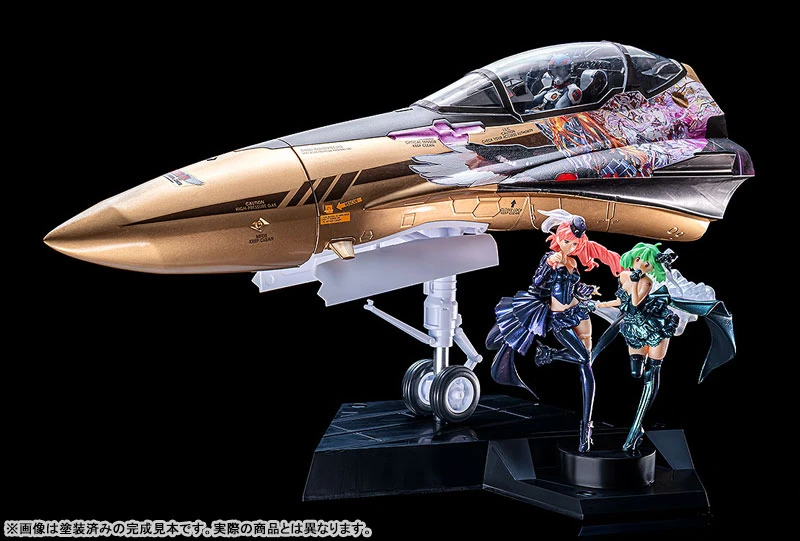 [MACROSS Frontier] Two Divas Included! The YF-29 Revealed at Galaxy Live Final 2025 Is Now a 1/20 Scale Model!2026-05-19 Saori
-
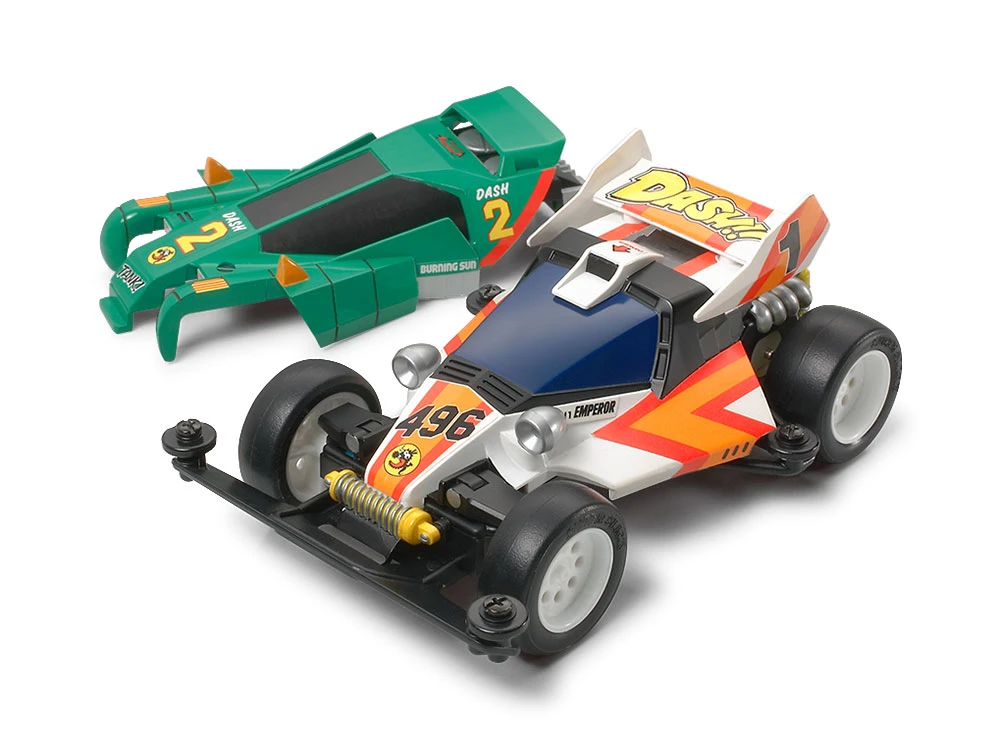 [Mini 4WD] A 2008 limited edition model is back in stock! Don't miss this Emperor special kit that lets you swap bodies and includes a legendary serialized poster!2026-05-12 Saori
-
 【2026 Latest】New engine cowl parts for the G-6 late production type! Featuring decals for 4 aircraft flown by top aces who once piloted this fighter, the Messerschmitt Bf109G-6 Late Production Type is now available as a 3D model!2026-05-08 Saori
Popular Articles
-
【2026 Latest】New engine cowl parts for the G-6 late production type! Featuring decals for 4 aircraft flown by top aces who once piloted this fighter, the Messerschmitt Bf109G-6 Late Production Type is now available as a 3D model!2026-05-08 Saori
-
【Tekkaman】The 3rd Entry in Tatsunoko's SF Action Hero Series, Depicted Across 26 Episodes, is Now a Model! Capable of Reproducing Various Action Poses, and Includes the Tech Lancer and Tech Win!2026-05-21 Saori
-
[MACROSS Frontier] Two Divas Included! The YF-29 Revealed at Galaxy Live Final 2025 Is Now a 1/20 Scale Model!2026-05-19 Saori
-
[Mini 4WD] A 2008 limited edition model is back in stock! Don't miss this Emperor special kit that lets you swap bodies and includes a legendary serialized poster!2026-05-12 Saori
-
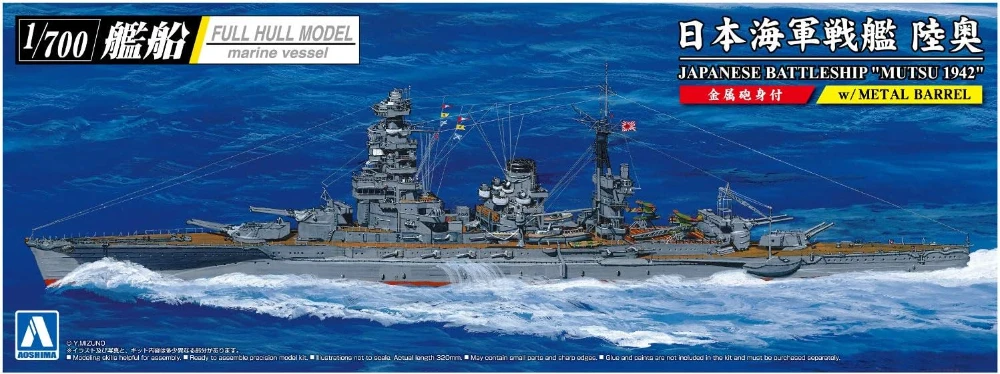 [BATTLE SHIP] The Battleship MUTSU, one of the ”Big Seven,” has been renewed! Assemble the battleship in full-hull model specifications that accurately reproduce the precision of the 1/700 scale!2026-05-01 Saori
-
[Maschinen Krieger] An ambitious work packed with the full charm of an unmanned reconnaissance aircraft! Oscar's forced reconnaissance type, the Sturmvogel—now featuring a newly added NINJA head and rocket launchers—is brought to life in 1/20 scale!2026-05-28 Saori